

Hail storms hit hard. Roofs take the impact. And then the insurance process begins fast, confusing, and often incomplete. That’s where Hail Damage Claim Supplements: What Carriers Miss in Their Scope becomes more than a phrase it becomes the difference between a partial payout and a fully restored property. I’ve seen it happen too many times. A homeowner receives an estimate, feels relieved, and signs off only to realize later that critical components weren’t included. Repairs stall. Costs rise. Stress builds. Suddenly, what looked like a resolution becomes a problem.
This is the gap most homeowners don’t see coming. Insurance estimates are not final. They’re starting points. And without a proper supplement strategy backed by Xactimate expertise, they rarely reflect the full scope of damage. If you’re dealing with a hail claim in Denton, understanding how supplements work can completely change your outcome.
Understanding the Insurance Scope of Loss
What Is a Scope of Loss?
The scope of loss is the backbone of your insurance claim. It’s a document that outlines:
- What was damaged
- What will be repaired or replaced
- How much the insurer is willing to pay
It dictates everything that follows. Your contractor relies on it. Your budget depends on it. And your final payout is tied directly to it. If the scope is incomplete, your entire project starts off underfunded.
Why Initial Scopes Are Often Incomplete
Here’s the truth: most initial scopes are built quickly.
Adjusters are often:
- Handling multiple claims per day
- Working under tight deadlines
- Performing surface-level inspections
That leads to gaps. Not always intentional but consistently present.
Common issues include:
- Missing line items
- Underestimated quantities
- Oversimplified repairs
- Ignored code requirements
And once those gaps exist, they don’t fix themselves.
What Is a Supplement in a Hail Damage Claim?
A supplement is a formal revision to the original insurance estimate. It adds what was missed, corrects what was underpriced, and aligns the scope with reality. Think of it as a correction not a dispute.
Supplements are used when:
- Hidden damage is discovered
- Additional components are required
- Costs exceed the original estimate
- Code upgrades apply
And here’s the key supplements are expected. Most claims require them.
The Role of Xactimate in Claim Accuracy
What Is Xactimate?
Xactimate is the estimating platform used across the insurance industry. It standardizes pricing, labor, and material costs based on location. Everything is built line-by-line. No guesswork. No rounding. Just structured data.
Why Xactimate Expertise Matters
Using Xactimate is one thing. Using it correctly is another.
A properly built estimate includes:
- Accurate measurements
- Correct material selections
- Full system components
- Updated regional pricing
A poorly built one leaves out key elements.
Let’s look at a simple example:
| Item | Incorrect Estimate | Correct Estimate |
| Roof Replacement | $7,500 | $11,800 |
| Ventilation | Not Included | $1,200 |
| Flashing | Partial | $950 |
| Disposal | Underestimated | $600 |
That difference isn’t random. It’s the result of expertise.
Hail Damage Claim Supplements: What Carriers Miss in Their Scope
This is where the real conversation begins. And where most of the money is left behind. Understanding Hail Damage Claim Supplements: What Carriers Miss in Their Scope requires a detailed look at what’s consistently overlooked.
1. Roofing Components Beyond Shingles
Shingles get all the attention. But they’re only one part of the system.
Often missed:
- Underlayment (essential moisture barrier)
- Starter strips (critical for wind resistance)
- Ridge caps (protect the roof peak)
- Drip edge (guides water off the roof)
- Ice and water shield (required in certain areas)
Without these, the roof isn’t complete. Yet many initial estimates include only shingles and basic labor.
2. Ventilation and Roof Accessories
Ventilation is often underestimated or ignored entirely.
Missing or underpriced items:
- Ridge vents
- Static vents
- Turbine vents
- Pipe boots
These aren’t optional upgrades they’re required for proper airflow and long-term roof health.
3. Flashing Systems
Flashing protects the most vulnerable areas of your roof.
Commonly missed:
- Step flashing along walls
- Counter flashing around chimneys
- Valley flashing
If flashing isn’t replaced correctly, leaks are almost guaranteed.
4. Soft Metals and Exterior Components
Hail hits everything not just the roof.
Frequently overlooked:
- Gutters and downspouts
- Metal flashing
- Window screens
- Garage doors
- Fence staining or damage
These items add up quickly. And they’re often left out entirely.
5. Structural and Decking Issues
This is where supplements become essential.
Hidden issues discovered during tear-off:
- Rotten decking
- Soft spots
- Improper fastening
- Code-required upgrades
These aren’t visible during initial inspections. But they’re real and they’re expensive.
6. Interior Damage Often Overlooked
Damage doesn’t stop at the exterior.
Interior signs include:
- Ceiling discoloration
- Peeling paint
- Insulation saturation
- Mold growth
These issues can take weeks to appear. By then, the original estimate is already closed unless you reopen it through a supplement.
Code Upgrades and Compliance: The Silent Cost Driver

Building codes aren’t suggestions. They’re requirements. And they change over time.
Common code-related additions:
- Ice and water shield installation
- Drip edge compliance
- Ventilation upgrades
- Decking attachment standards
Insurance policies often include ordinance and law coverage but carriers don’t always apply it automatically. It has to be requested. Documented. Justified. That’s where supplements become critical.
Real-World Code Scenario
Let’s make this practical.
A roof replacement requires:
- Full tear-off
- Decking inspection
- Re-nailing to meet current wind uplift standards
The original estimate includes only shingles and labor.
What’s missing?
- Re-nailing labor
- Additional fasteners
- Inspection compliance
That alone can add $1,500 to $3,000 to the claim. Without a supplement, it doesn’t get paid.
How Insurance Adjusters Miss Damage
Let’s break it down clearly.
Damage is missed because:
- Inspections are visual, not invasive
- Time on-site is limited
- Adjusters may lack roofing specialization
- Conditions (lighting, weather) affect visibility
It’s not always about intent. It’s about process limitations.
The Financial Impact of Missing Scope Items
Here’s what missing scope actually costs:
| Category | Missed Value |
| Underlayment & Accessories | $2,000–$4,000 |
| Ventilation Systems | $800–$2,500 |
| Flashing Replacement | $500–$1,500 |
| Gutters & Exterior | $1,500–$5,000 |
| Decking Repairs | $1,000–$6,000 |
Total potential loss: $5,000 to $15,000+
That’s not a small gap. That’s a major shortfall.
The Supplement Process Step-by-Step
Here’s how it actually works.
Step 1: Re-Inspection
A detailed inspection identifies missed or under-scoped items.
Step 2: Documentation
Photos, notes, measurements everything is recorded.
Step 3: Xactimate Estimate
A full, accurate estimate is created using proper line items.
Step 4: Submission
The supplement is submitted with supporting evidence.
Step 5: Negotiation
Adjusters review, question, and revise.
Step 6: Approval
Additional funds are released.
Advanced Xactimate Strategies That Increase Claim Value
This is where expertise truly shows.
Strong supplements include:
- Proper waste calculations (not flat rates)
- Correct labor minimums
- Detailing steep roof charges
- Including detach/reset items
- Accounting for material delivery logistics
Small details. Big impact.
For example:
- Adding steep charge: +$1,200
- Including high charges: +$800
- Correct waste factor: +$600
- Delivery and setup costs: +$500
That’s thousands added through accuracy alone.
Line-Item Precision Example
Instead of writing:
- “Roof replacement – $10,000”
A precise estimate includes:
- Tear-off labor
- Disposal fees
- Underlayment
- Starter strip
- Ridge cap
- Flashing
- Ventilation
- Fasteners
- Drip edge
Each item is priced separately. That’s how accuracy is built.
Contractor vs Adjuster vs Public Adjuster: Who Does What?
Understanding roles helps you avoid confusion.
| Role | Focus | Limitation |
| Contractor | Repairs and construction | Limited claim negotiation |
| Insurance Adjuster | Evaluates damage for carrier | Works for insurer |
| Public Adjuster | Represents homeowner | Focused on maximizing claim |
Each plays a role. But only one works fully on your behalf.
Common Mistakes Homeowners Make
Avoid these pitfalls:
- Accepting the first estimate without review
- Starting repairs before full scope approval
- Failing to document damage
- Choosing the lowest contractor bid
- Ignoring missing line items
These decisions limit your claim potential.
Why Contractors Alone Aren’t Enough
Contractors build. They don’t negotiate claims.
Limitations:
- No policy interpretation
- Limited insurance communication
- Focus on construction not documentation
They’re critical but they’re not the full solution.
Why a Public Adjuster Changes the Outcome
A public adjuster works for you.
They bring:
- Claim strategy
- Policy knowledge
- Xactimate expertise
- Negotiation leverage
They don’t just document damage. They defend it.
Real Scenario: From Undervalued Claim to Full Payout
A homeowner in Denton receives an initial estimate of $9,800.
It covers:
- Basic roof replacement
- Minimal accessories
A re-inspection reveals:
- Missing flashing
- No ventilation upgrades
- Underestimated decking
- Ignored gutter damage
A supplement is submitted using Xactimate. Final payout: $21,300. Same house. Same storm. Completely different outcome.
What to Do If Your Hail Claim Was Denied in Texas
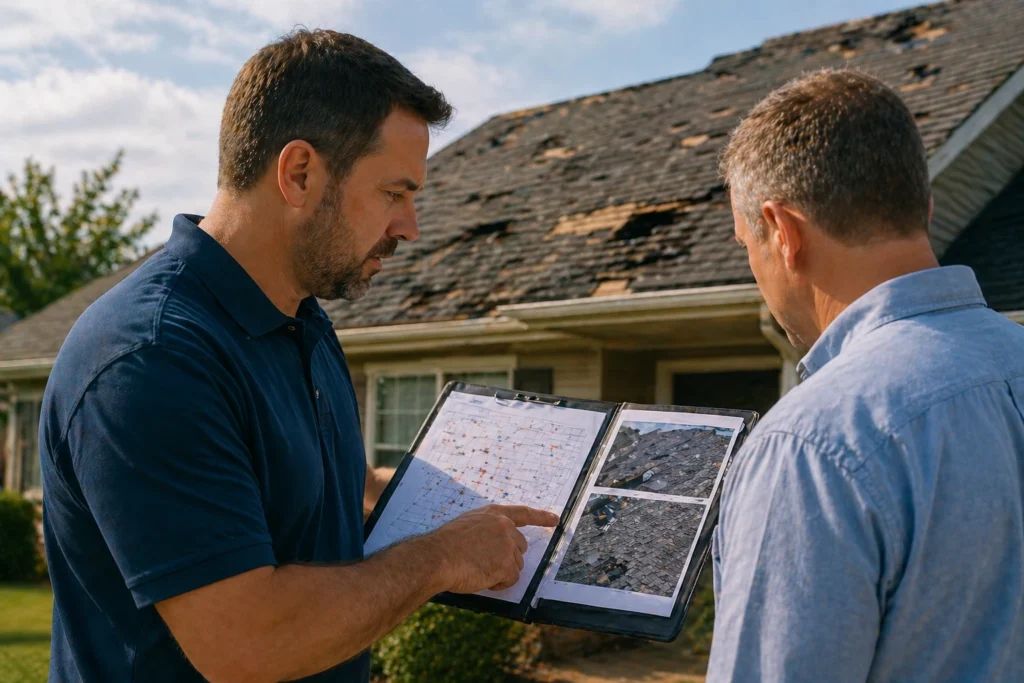
Denials happen. And when they do, most homeowners feel stuck. But here’s the reality you still have options. Start by requesting a full explanation of the denial. Review your policy carefully. Then, schedule an independent inspection to identify missed damage. This is where supplements can re-enter the picture, even after a denial. A properly documented supplement can reopen the claim, challenge the carrier’s position, and shift the outcome in your favor. Don’t assume a denial is the end. Often, it’s just the beginning of a more detailed review process.
How to Strengthen Your Hail Claim
Take control early.
- Document damage immediately
- Schedule a professional inspection
- Keep every record
- Understand your policy
- Don’t rush the process
Strong claims are built, not rushed.
When to Request a Supplement
You should request a supplement when:
- New damage appears
- Costs exceed the estimate
- Items were clearly missed
- Repairs reveal hidden issues
Trust your instincts. If something feels incomplete, it probably is.
Timeline Expectations for Supplements
Here’s a realistic timeline:
- Inspection: 1–3 days
- Estimate creation: 2–5 days
- Carrier review: 5–10 days
- Negotiation: 1–3 weeks
Delays happen. Persistence matters.
A Broader Perspective on Complexity
Sometimes, understanding insurance claims feels like navigating a system layered with complexity. In a completely different field, scientists use the term Noether’s theorem to describe how hidden structures govern outcomes beneath the surface. Insurance claims work in a similar way. What you see on the surface the initial estimate is only part of the story. The real structure lies beneath, in the details, the line items, and the missing components that supplements uncover.
Final Takeaway: Precision Wins the Claim
At the end of the day, hail claims come down to one thing precision. Not assumptions. Not shortcuts. Not quick estimates.
Precision. That’s why Hail Damage Claim Supplements: What Carriers Miss in Their Scope is such a critical concept. It exposes the gap between what’s initially written and what’s actually required. And that gap? It’s where thousands of dollars live. If you’re navigating a claim in Denton, don’t settle for surface-level numbers. Push deeper. Review every line item. Ask better questions. Demand complete documentation. Because the difference between an average claim and a fully paid claim isn’t luck.
FAQs
They are revisions to your insurance estimate that include missed damage or adjust incorrect pricing.
Adjusters may perform quick inspections, leading to overlooked components and under-scoped repairs.
Request one when repair costs exceed the estimate or hidden damage is discovered.
Yes, multiple supplements can be filed as long as each is supported with proper documentation.
It’s not required, but it’s the industry standard and helps ensure accuracy and approval.
They may review and negotiate it, but strong documentation improves approval chances.
Yes, if new damage is found, you can request a supplement depending on your policy terms.
No, supplements correct the claim amount and don’t directly impact premiums.
It usually takes a few days to a few weeks depending on the complexity and response time.
Yes, professionals can identify missed items and handle negotiations more effectively.