
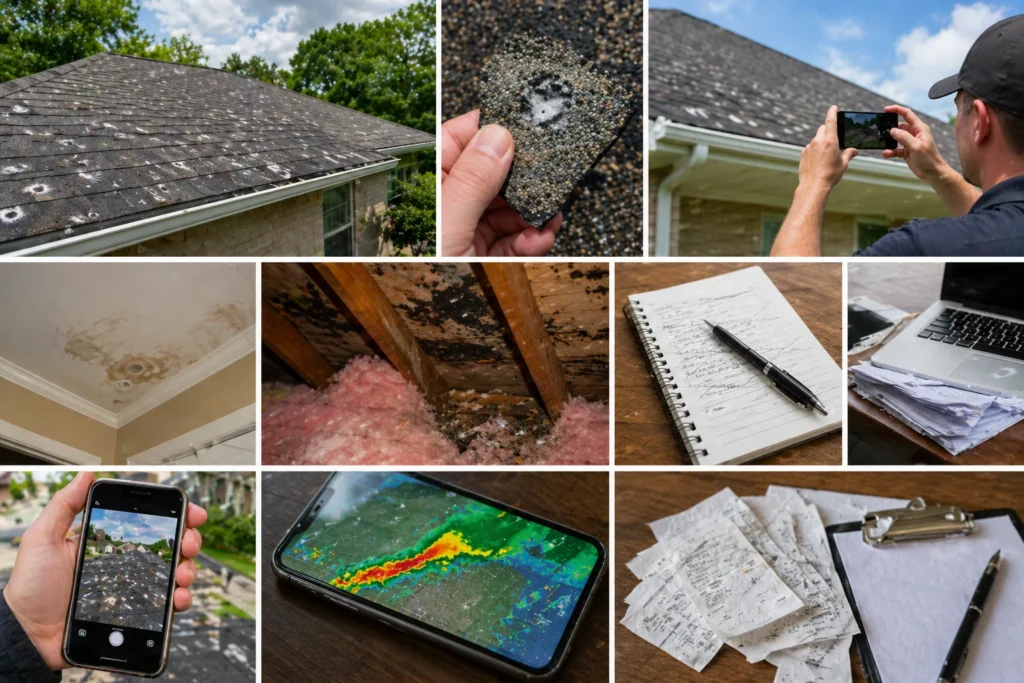
Texas weather doesn’t ease you in. It hits fast, hard, and without warning. One minute everything feels normal. The next, your roof is taking a beating from hail that can crack, dent, and weaken critical materials in seconds. If you’re dealing with a roof hail damage insurance claim Texas, what you do next matters more than most people realize.
I’ve seen homeowners in Denton underestimate damage simply because it wasn’t obvious right away. That’s where costly mistakes begin. Small impact points turn into leaks. Minor cracks expand. And insurance claims that could have paid out fully end up underpaid or denied because the process wasn’t handled correctly. This guide is built to give you control. Not just awareness. Control. You’ll learn exactly how to identify hail damage, what to do immediately after a storm, how to document your claim, what insurance carriers often miss, and why having the right support can dramatically change your outcome.
Understanding Hail Damage and Why It Matters
Hail damage isn’t always dramatic. That’s the dangerous part. Most homeowners expect obvious signs missing shingles, broken tiles, visible holes. But real damage often shows up in subtle ways:
- Small impact bruises
- Granule loss on shingles
- Microfractures in materials
- Loosened fasteners or seams
These may seem minor. They’re not.
Over time, these small issues allow moisture to enter your roofing system. Once that happens, deterioration accelerates. Mold, rot, and structural weakening follow. That’s why addressing hail damage early is essential in any hail roof damage insurance situation. Insurance companies evaluate claims based on whether damage is functional or cosmetic. Functional damage affects performance. Cosmetic damage is often dismissed. But here’s the truth. Cosmetic damage doesn’t stay cosmetic forever.
How to Identify Hail Damage by Roof Type (Expert Breakdown)
Every roof tells a different story after a hailstorm. You just need to know how to read it.
Asphalt Shingle Roofs
The most common roof type and one of the most frequently misjudged.
Signs of hail damage:
- Dark patches where granules are missing
- Soft “bruised” areas under pressure
- Circular impact marks scattered randomly
- Exposed fiberglass mat
Why it matters:
Granules protect shingles from UV exposure. Once they’re gone, deterioration speeds up dramatically.
Pro tip:
Damage patterns should be random. Uniform wear often signals aging not hail.
Metal Roofs
Metal roofs are tough. But hail still leaves evidence.
Look for:
- Dents or dimples
- Scratches exposing raw metal
- Loose fasteners or seam distortion
Not all dents qualify for a hail damage on roof insurance claim. The key question is whether the damage affects function or longevity.
Tile Roofs (Clay or Concrete)
Tile roofs can handle impact but not without consequences.
Watch for:
- Cracked or shattered tiles
- Chips along edges
- Displaced or misaligned tiles
- Hidden damage beneath the surface
Tile systems often hide deeper issues. That’s why they’re frequently undervalued in a roof hail damage insurance claim Texas.
Additional Indicators Across All Roof Types
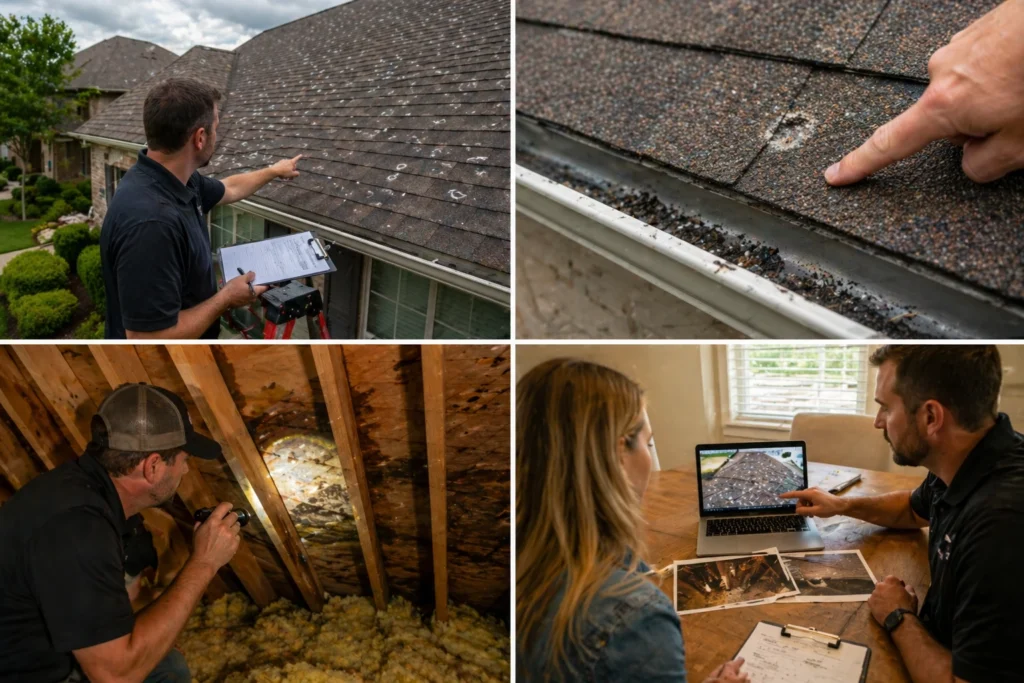
Don’t stop at the roof.
Check:
- Gutters and downspouts for dents
- Flashing around vents and chimneys
- AC units and outdoor equipment
- Windows, fences, and siding
These signs strengthen your claim. They show the storm’s intensity.
Immediate Steps to Take After a Hailstorm
This is where your claim is either protected or weakened. Act quickly. But act smart.
Do this immediately:
- Stay off the roof until it’s safe
- Walk your property and document visible damage
- Take photos and videos from multiple angles
- Check your attic for leaks or moisture
- Cover exposed areas if necessary
- Contact your insurance provider
Keep your report simple. Stick to facts. Avoid assumptions. Timing matters in a roof hail damage insurance claim Texas. Waiting too long can raise questions about cause and coverage.
How to Document Hail Damage for an Insurance Claim
Documentation isn’t just helpful it’s your leverage. To properly handle How to Document Hail Damage for an Insurance Claim, you need detail, clarity, and consistency.
What to capture:
- High-resolution photos of all affected areas
- Close-ups and wide-angle shots
- Video walkthroughs of your roof and property
- Interior damage (ceilings, walls, insulation)
- A written timeline of events
- All communication with your insurer
- Receipts for temporary repairs
- Local weather data confirming the storm
Think of your documentation as a case file. The stronger it is, the stronger your claim becomes.
What Insurance Carriers Commonly Miss in Their Scope
Here’s the reality. Initial estimates are often incomplete. Insurance adjusters work fast. And in that speed, details get overlooked.
Commonly missed items:
- Accurate roof measurements
- Code-required upgrades
- Flashing and drip edges
- Ventilation components
- Underlayment and decking
- Current labor and material costs
Let’s simplify it:
| Component | Why It’s Important |
| Underlayment | Secondary moisture barrier |
| Flashing | Prevents leaks at joints |
| Ventilation | Controls airflow and moisture |
| Code upgrades | Required for compliance |
This is exactly why Hail Damage Claim Supplements: What Carriers Miss in Their Scope is such a critical concept. What’s missing from the estimate is often where your claim gains value.
The Supplement Process Explained
A supplement is how you correct an incomplete claim. It’s not a workaround. It’s part of the system.
What is a supplement?
An additional request submitted when new damage or costs are discovered after the initial estimate.
When to file one:
- Hidden damage appears during repairs
- Costs exceed the original estimate
- Code requirements were excluded
- Additional components need replacement
How it works:
- Reassess the damage
- Gather documentation
- Submit revised estimate
- Insurance reviews and updates payout
Handled correctly, supplements can significantly increase your roof hail damage insurance claim Texas payout.
Public Adjuster vs. Insurance Adjuster for Hail Claims in Texas
This distinction changes everything.
Insurance Adjuster:
- Works for the insurance company
- Focuses on controlling costs
- Produces the initial estimate
Public Adjuster:
- Works for you
- Focuses on maximizing your claim
- Reviews, documents, and negotiates
Understanding Public Adjuster vs. Insurance Adjuster for Hail Claims in Texas isn’t just helpful it’s strategic.
Why a Public Adjuster Changes the Outcome
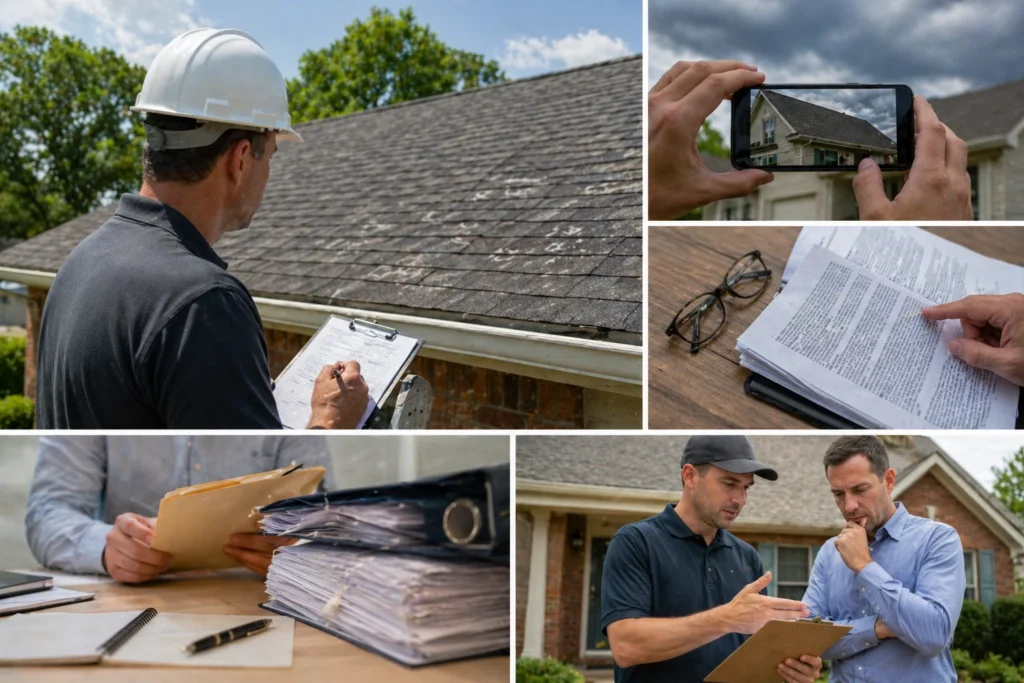
This is where real differences show up. A public adjuster doesn’t just review your claim they rebuild it from the ground up.
What they do:
- Conduct detailed inspections
- Identify hidden and overlooked damage
- Use professional estimating tools
- Interpret complex policy language
- Negotiate directly with insurance carriers
Real-world example:
| Stage | Without PA | With PA |
| Initial estimate | $10,000 | $10,000 |
| After review | $10,000 | $21,000 |
| Final payout | $10,000 | $27,500 |
This kind of difference is common in hail roof damage insurance claims.
What to Do If Your Hail Claim Was Denied in Texas
A denial doesn’t end the process. It starts the next step.
Common reasons for denial:
- Damage labeled as wear and tear
- Insufficient documentation
- Missed deadlines
- Disputed cause of damage
What to do next:
- Request a re-inspection
- Get an independent assessment
- Submit additional documentation
- File a supplement or appeal
This is where What to Do If Your Hail Claim Was Denied in Texas becomes critical. With the right approach, denied claims can be reopened and approved.
Common Mistakes Homeowners Make
Even experienced homeowners make mistakes during the claims process.
Avoid these:
- Waiting too long to file
- Accepting the first estimate
- Failing to document properly
- Hiring inexperienced contractors
- Trying to handle everything alone
Each mistake reduces your leverage and your payout.
Pro Tips to Maximize Your Claim
Want better results? Start here.
- Schedule regular roof inspections
- Take pre-storm photos
- Understand your policy coverage
- Keep all documents organized
- Work with professionals early
These steps aren’t optional if you want the best outcome in a roof hail damage insurance claim Texas.
Real Scenario: Turning a Weak Claim into a Full Payout
Let’s make this practical. A homeowner in Denton experiences a hailstorm. Initial inspection shows minimal damage. Insurance estimate comes in low around $8,500. Something feels off.
They bring in a professional inspection. Hidden damage is discovered:
- Compromised underlayment
- Damaged flashing
- Code upgrade requirements
A supplement is filed.
The result?
- Revised estimate: $19,000
- Final payout: $24,000
Same roof. Same storm. Completely different outcome.
Advanced Claim Strategies Most Homeowners Miss
If you want to take your claim further, this is where you focus.
1. Layer Your Documentation
Don’t rely on one type of evidence. Combine photos, videos, written notes, and third-party reports.
2. Understand Depreciation
Insurance may reduce payout based on roof age. Know how recoverable depreciation works.
3. Track Every Conversation
Keep records of every call, email, and inspection. Details matter during disputes.
4. Don’t Rush Repairs Without Review
Starting repairs too early can limit your ability to file supplements.
5. Get a Second Opinion
If something feels off, it probably is.
These strategies can significantly improve your roof hail damage insurance claim Texas results.
Additional Resource
Understanding complex systems can sharpen how you approach insurance claims. One example is Epistemology, which explores how knowledge is validated and justified much like how evidence and documentation are evaluated in a roof hail damage insurance claim Texas.
Final Thoughts: Protect Your Roof, Protect Your Investment
Hailstorms don’t last long. But their impact does. The difference between a stressful claim and a successful one comes down to knowledge and action. Act quickly. Document everything. Question the first estimate. And don’t hesitate to bring in expert support when needed.
Because when you’re dealing with a roof hail damage insurance claim Texas, it’s not just about the damage. It’s about how well you navigate the process. And if you’re in Denton, understanding this process can mean the difference between an underpaid claim and a fully covered roof replacement. Now you’re equipped. Use it.
FAQs
Look for granule loss, dents, cracks, or bruising on shingles and metal components after a storm.
File as soon as possible after the storm to avoid delays and questions about the cause of damage.
Coverage depends on your policy and whether the damage is considered functional rather than cosmetic.
A roof inspection identifies visible and hidden damage, helping support your insurance claim with evidence.
Yes, even minor damage can worsen over time and may qualify for a claim if it affects roof performance.
A supplement is a request for additional funds when new damage or costs are discovered after the initial estimate.
Initial estimates may miss hidden damage, code upgrades, or use outdated pricing.
A public adjuster can help maximize your payout by identifying overlooked damage and negotiating with insurers.
You can request a re-inspection, provide more documentation, or file an appeal to challenge the decision.
Premium changes depend on your insurer and claim history, but storm-related claims are often treated differently.