
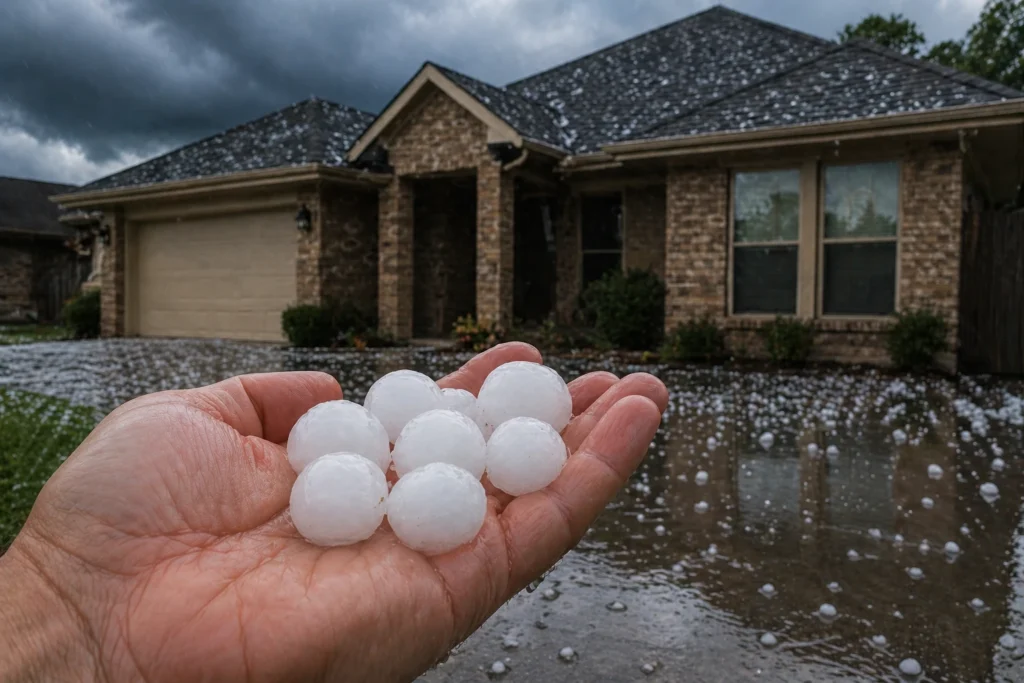
Two Adjusters, One Claim Who’s Really on Your Side? A hailstorm hits hard. You hear it before you see it. Sharp impacts. Rapid fire. Then silence. And after that silence comes uncertainty. What did it damage? How bad is it? And most importantly what is your insurance actually going to pay?
This is where the conversation around Public Adjuster vs. Insurance Adjuster for Hail Claims in Texas becomes critical. Because once you file a claim, you’re no longer just dealing with damage. You’re dealing with a process. A structured system designed to evaluate, price, and settle your loss. And inside that system are two very different professionals: one representing the insurance company, and one who can represent you.
At a glance, they look similar. Both inspect. Both estimate. Both talk numbers. But behind the scenes? Their incentives, priorities, and outcomes couldn’t be more different. For homeowners in storm-prone areas like Denton, this distinction often determines whether you receive a basic payout or a fully developed claim that actually restores your property the right way. Let’s go deeper. Not surface-level advice. Real insight you can use immediately.
Understanding the Basics of Hail Claims in Texas
Texas consistently ranks among the top states for hail damage. That’s not just a weather pattern—it’s a financial reality for homeowners.
Hail impacts your property in layers:
- Roof surface damage (granule loss, bruising, cracking)
- Functional damage that reduces lifespan
- Accessory damage (vents, flashing, ridge caps)
- Exterior damage (siding, gutters, windows)
- Interior damage from leaks that develop later
Here’s where things get complicated.
Not all damage shows up right away. Some issues take weeks or months to become visible. By then, your claim may already be closed. That’s why the accuracy of your initial inspection and the strength of your claim strategy matters so much. Because once something is missed, it’s harder to recover later.
What Is an Insurance Adjuster?
An insurance adjuster is assigned by your insurance company after you file a claim.
Their job includes:
- Inspecting the property
- Documenting damage
- Creating an estimate
- Determining a payout
They are trained professionals. Many are experienced. But their role is defined by one key fact: they work for the insurance company.
There are two primary types:
- Staff Adjusters – direct employees of the insurer
- Independent Adjusters – contractors hired during peak claim periods
Their job is to evaluate damage within company guidelines. That means:
- Following standardized inspection procedures
- Using approved pricing databases
- Staying within policy interpretations set by the insurer
In large storm events, adjusters may handle dozens of claims per week. Efficiency becomes a priority. And efficiency, while necessary, can limit depth.
What Is a Public Adjuster?
A public adjuster represents you the policyholder. Their role is more comprehensive and often more aggressive in terms of claim development.
They will:
- Conduct a detailed inspection of your property
- Identify all areas of damage (visible and hidden)
- Review your insurance policy line by line
- Build a complete, itemized estimate
- Submit documentation and negotiate directly with the insurer
Public adjusters in Texas are licensed professionals. They operate under state regulations and must act in your best interest. Their compensation structure is simple: a percentage of your final settlement. That means they are financially aligned with your outcome.
If your claim increases, they benefit. If it doesn’t, neither do they. That alignment is one of the biggest differentiators in the Public Adjuster vs. Insurance Adjuster for Hail Claims in Texas discussion.
Public Adjuster vs. Insurance Adjuster: Side-by-Side Comparison
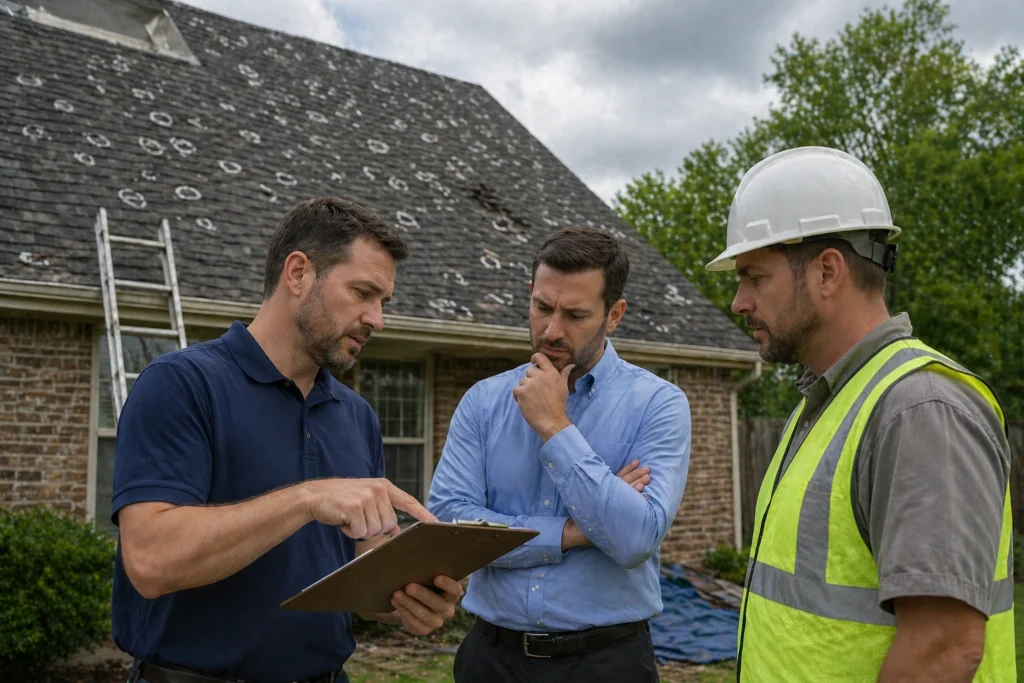
Here’s a clear breakdown:
| Category | Public Adjuster | Insurance Adjuster |
| Representation | Homeowner | Insurance company |
| Goal | Maximize claim value | Control claim cost |
| Payment | % of settlement | Salary/contract |
| Inspection approach | Detailed, multi-layered | Standardized, time-limited |
| Claim strategy | Proactive | Reactive |
| Negotiation | Yes | Limited |
This isn’t about who is “better” in general. It’s about who is better for your situation.
Key Differences That Shape Claim Outcomes
1. Incentives Drive Behavior
Every decision in a claim ties back to incentives.
- Public adjuster → increase claim value
- Insurance adjuster → manage claim cost
That doesn’t imply wrongdoing. It reflects structure.
2. Inspection Depth
A rushed inspection may overlook:
- Soft impact marks on shingles
- Underlayment compromise
- Minor flashing displacement
- Early-stage water intrusion
A detailed inspection captures these and those details often justify thousands in additional repairs.
3. Line Item Detail
Estimates aren’t just totals. They’re built line by line.
Public adjusters typically:
- Add overlooked materials
- Include labor complexities
- Account for waste factors
- Address code compliance
Insurance estimates often start lean and expand only if challenged.
4. Negotiation Strategy
Insurance adjusters don’t advocate for you.
Public adjusters do.
They push back on low valuations, defend their scope, and provide supporting documentation.
That back-and-forth is where claims grow.
How Insurance Adjusters Evaluate Hail Damage
The typical process:
- Schedule inspection
- Visit property
- Identify visible damage
- Take photos
- Generate estimate
- Issue payout
It’s efficient. Structured. Predictable.
But it has limitations:
- Short inspection windows
- Limited access to complex roofs
- Focus on immediate damage only
- Minimal follow-up unless disputed
This is why many initial estimates come in lower than expected.
How Public Adjusters Approach Hail Claims
Public adjusters take a more investigative approach.
They:
- Inspect all accessible surfaces thoroughly
- Use detailed photo documentation
- Measure and map damage areas
- Cross-reference findings with policy coverage
- Build comprehensive estimates
They’re not just documenting damage. They’re building leverage. And that leverage becomes critical during negotiations.
The Supplement Process: Where Claims Expand
Supplements are one of the most misunderstood parts of a claim. A supplement is an addition or correction to the original estimate.
It may include:
- Missed damage
- Incorrect measurements
- Updated pricing
- Additional materials
- Code-required upgrades
This is exactly where many claims fall short. Hail Damage Claim Supplements: What Carriers Miss in Their Scope becomes especially relevant at this stage, because initial insurance estimates often exclude critical components like flashing, underlayment, ventilation systems, and labor complexities that are essential for a complete repair.
Example of Line-Item Differences
| Item | Insurance Estimate | Supplement Adjustment |
| Roof shingles | Basic replacement | Includes starter, ridge, waste |
| Flashing | Minimal | Full replacement |
| Underlayment | Partial | Full coverage |
| Labor | Standard | Adjusted for complexity |
Insurance adjusters typically wait for supplements. Public adjusters build them proactively. And in many cases, supplements significantly increase the final settlement.
Contractor vs. Adjuster: Who Does What?
Many homeowners assume contractors will handle everything.
They don’t.
Here’s the distinction:
- Contractor → performs repairs
- Adjuster → defines what gets paid
A contractor can point out damage. But they can’t negotiate your claim the way a public adjuster can.
The best outcomes often come from coordination:
- Public adjuster builds and negotiates claim
- Contractor executes repairs based on approved scope
This separation keeps the process clean and effective.
Step-by-Step: Building a Strong Hail Claim
If you want to maximize your claim, follow this process:
1. Inspect Immediately
Time matters. Damage can worsen quickly.
2. Document Thoroughly
Take clear photos and videos. Capture everything.
3. File Promptly
Avoid delays that could complicate coverage.
4. Review the Estimate
Don’t assume it’s complete.
5. Identify Missing Items
Compare scope with actual damage.
6. Submit Supplements
Add what was overlooked.
7. Negotiate
Push for fair pricing and full coverage.
This is where public adjusters bring the most value.
Common Mistakes That Cost Homeowners Money
Avoid these:
- Accepting the first offer without review
- Skipping a second inspection
- Ignoring subtle damage
- Misunderstanding policy terms
- Waiting too long to act
In areas like Denton, where storms hit regularly, these mistakes happen often and they add up fast.
When Should You Hire a Public Adjuster?
You should strongly consider it if:
- Your claim was denied
- The payout seems too low
- The damage is complex
- You don’t have time to manage the process
- You want professional negotiation
For larger claims, especially after major storms in Denton, this decision can dramatically impact your final settlement.
Cost vs. Value: A Real Look
Yes, public adjusters charge a fee.
But what matters is the outcome.
Let’s break it down:
- Initial offer: $12,000
- Final negotiated settlement: $25,000
- Adjuster fee (10%): $2,500
Net to homeowner: $22,500
That’s still significantly higher than the original offer. It’s not about avoiding fees. It’s about maximizing value.
Real Claim Case Study: Denton Hail Storm Scenario
Let’s walk through a realistic scenario.
Initial Situation
A homeowner in Denton experiences a severe hailstorm.
- Roof damage visible
- Minor interior staining
- Gutters dented
Insurance Adjuster Outcome
- Partial roof repair approved
- Gutters included
- Interior damage excluded
Total payout: $9,800
Public Adjuster Involvement
- Conducts second inspection
- Identifies full roof system damage
- Documents underlayment issues
- Adds interior moisture damage
- Submits supplement
Final Outcome
- Full roof replacement approved
- Interior repairs included
- Updated labor and material costs
Final payout: $21,400
That’s the difference strategy makes.
Texas-Specific Claim Considerations
Texas claims have unique factors:
- Filing deadlines vary by policy
- Weather-related claims can surge rapidly
- Pricing fluctuates due to demand
- Building codes may require upgrades
Understanding these details is essential. And local experience especially in Denton can make a meaningful difference in how claims are handled.
Pros and Cons: Clear Breakdown
Public Adjuster Pros
- Strong representation
- Higher settlement potential
- Detailed claims
Public Adjuster Cons
- Fees
- Not necessary for small claims
Insurance Adjuster Pros
- No direct cost
- Faster initial payout
Insurance Adjuster Cons
- Limited scope
- Lower initial estimates
- No homeowner advocacy
How to Decide What’s Right for You
Ask yourself:
- Is the damage extensive?
- Does the estimate feel complete?
- Am I confident negotiating?
- Do I have time to manage this?
If not, bringing in a public adjuster may be the smarter move.
A Broader Perspective on Complexity
Insurance claims can feel simple at first and then quickly become layered. In science, a concept called phase transition describes how small changes can lead to completely different outcomes. Claims behave similarly. A minor adjustment in scope or pricing can dramatically shift the final payout. That’s why attention to detail matters so much.
Final Verdict: Which Adjuster Is Better?
So where does this leave us?
The answer to Public Adjuster vs. Insurance Adjuster for Hail Claims in Texas depends on your situation.
- Small, simple claims → insurance adjuster may be sufficient
- Large, complex claims → public adjuster often delivers better results
The bigger the claim, the more valuable professional representation becomes.
Conclusion: Take Control of Your Claim
Hail damage is unpredictable. But your response doesn’t have to be. Understanding the difference between a public adjuster and an insurance adjuster gives you control. It helps you avoid costly mistakes. It positions you for a stronger outcome.
Because at the end of the day, this isn’t just about a claim. It’s about restoring your home the right way. Protecting your investment. And making sure you’re not leaving money on the table. Make the informed choice.
FAQs
A public adjuster represents the homeowner, while an insurance adjuster represents the insurance company during the claim process.
No, smaller or straightforward claims may not require one, but larger or complex claims often benefit from professional representation.
Yes, public adjusters often identify overlooked damage and negotiate supplements that can increase the final settlement.
They typically charge a percentage of the final claim settlement, meaning their compensation depends on your payout.
Initial estimates may miss hidden damage, use limited scope, or apply conservative pricing based on insurer guidelines.
A supplement is an additional request to include missed damage or adjust pricing after the initial estimate.
Contractors can identify damage, but they cannot legally negotiate or manage your claim like a licensed adjuster.
It can take a few weeks to several months, depending on the complexity, supplements, and negotiation process.
You can dispute the decision, provide additional documentation, or hire a public adjuster to reopen or challenge the claim.
For larger claims, the increased settlement often outweighs the fee, making it a valuable investment.