
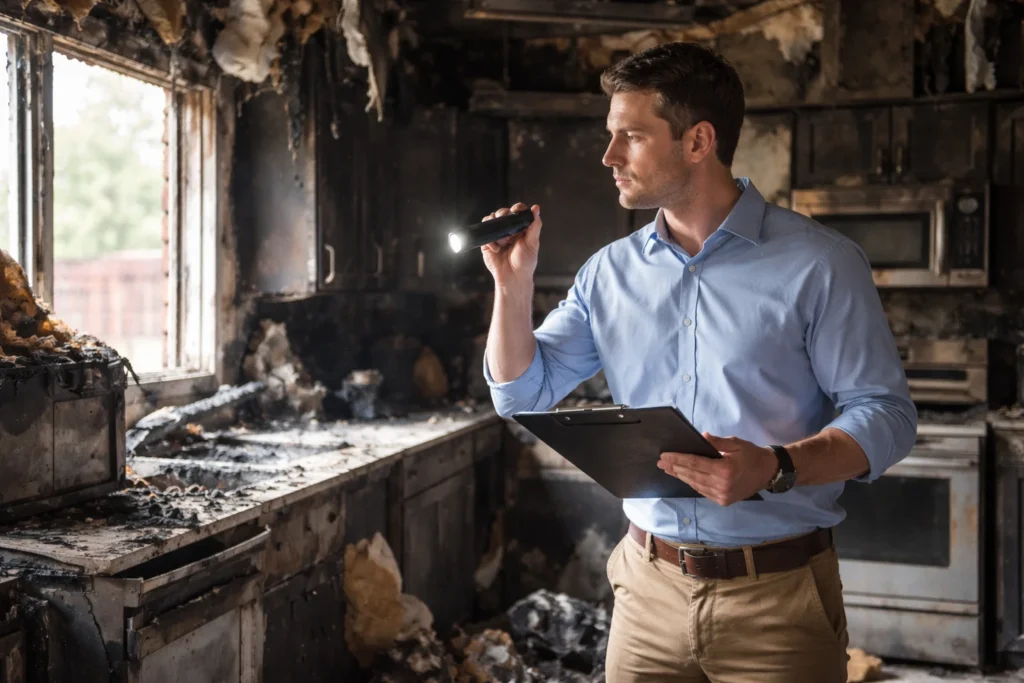
A house fire changes everything in a matter of minutes. One moment, you’re thinking about dinner plans. The next, you’re staring at smoke, damage, and uncertainty. This is where a fire insurance adjuster steps in and understanding their role can make a massive difference in how your claim plays out.
I’ve seen it happen too often. Homeowners assume the insurance company will “handle everything.” But the reality? Claims can be underpaid, delayed, or even denied if you don’t know how the process works. Think of the process like a complex system almost like ergodicity where small overlooked details can completely change the final outcome. Let’s break it down clearly so you can protect your claim, your property, and your peace of mind.
The Short Answer: What Is a Fire Insurance Adjuster?
A fire insurance adjuster is a professional who evaluates property damage caused by fire and helps determine how much the insurance company should pay. Simple enough. But here’s the nuance.
They don’t just look at burned walls and say, “Here’s your check.” They inspect, document, estimate, and interpret your insurance policy. Their findings directly impact your payout. And here’s the key point: not all adjusters are on your side.
Types of Fire Insurance Adjusters Explained
Understanding who’s working for whom is critical. This alone can change how you approach your claim.
Company (Staff) Adjusters
- Employed by the insurance company
- Represent the insurer’s financial interests
- Aim to settle claims efficiently (and often conservatively)
Independent Adjusters
- Contracted by insurance companies
- Common during large-scale disasters
- Still represent the insurer not you
Public Adjusters
- Hired by homeowners
- Work exclusively for you
- Focus on maximizing your claim
This is where many Denton homeowners shift their strategy. A public adjuster levels the playing field.
What Does a Fire Insurance Adjuster Actually Do?
Let’s get practical. What happens when an adjuster shows up?
Here’s what a fire insurance adjuster typically handles:
- Inspects structural damage (walls, roof, foundation)
- Evaluates smoke and soot contamination
- Assesses water damage from firefighting efforts
- Documents personal property loss
- Reviews your insurance policy in detail
- Prepares repair and replacement estimates
- Negotiates settlement amounts
It’s not just a walkthrough. It’s a detailed financial evaluation of your loss. And small details matter. Missed damage equals missed money.
Step-by-Step: How the Fire Insurance Claims Process Works
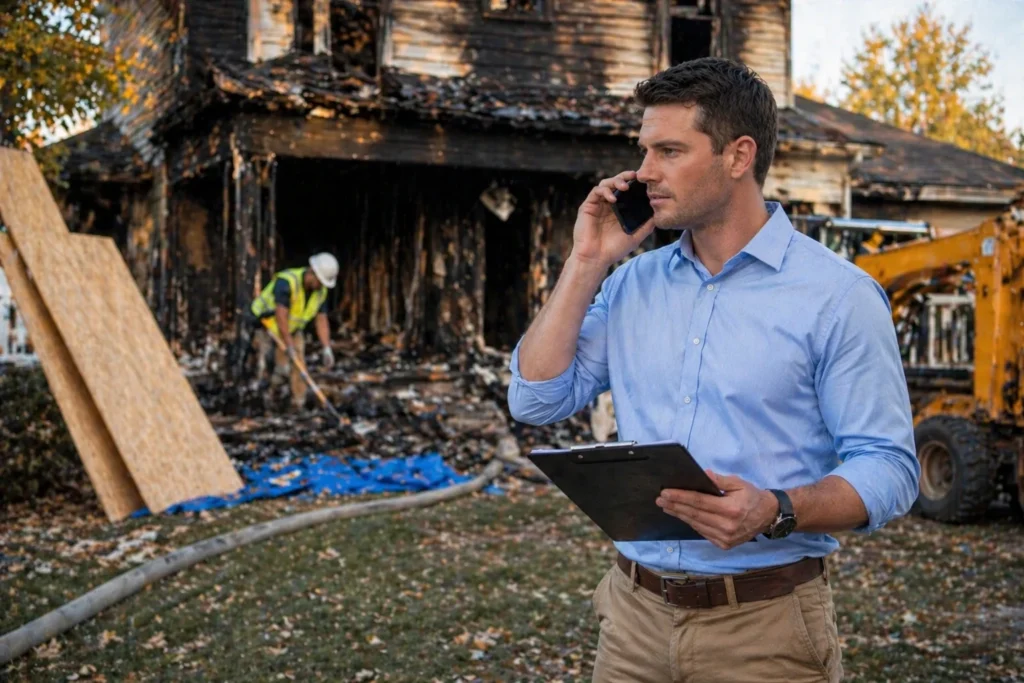
Knowing the process helps you stay in control. Here’s how it usually unfolds.
Step 1: Immediate Response After the Fire
- Ensure safety first
- Contact your insurance company
- Begin mitigation (boarding up, water removal)
Step 2: Initial Inspection
The fire insurance adjuster visits your property. They document visible damage and begin their report.
Step 3: Damage Assessment and Estimates
This is where numbers get assigned. Repair costs. Replacement values. Everything gets calculated.
Step 4: Claim Review and Negotiation
You’ll likely go back and forth with the insurer. This stage can take time and patience.
Step 5: Final Settlement
Once agreed, payments are issued. Sometimes in stages.
Why Hiring a Public Fire Insurance Adjuster Can Change Everything
Let’s be direct. Insurance companies handle claims every day. You probably don’t.
That imbalance matters.
A public fire insurance adjuster works to:
- Maximize your settlement
- Ensure no damage is overlooked
- Handle complex paperwork
- Push back against low estimates
And honestly? They take a huge burden off your shoulders. After a fire, the last thing you want is to argue over line items and depreciation values.
Common Challenges Homeowners Face Without a Fire Insurance Adjuster
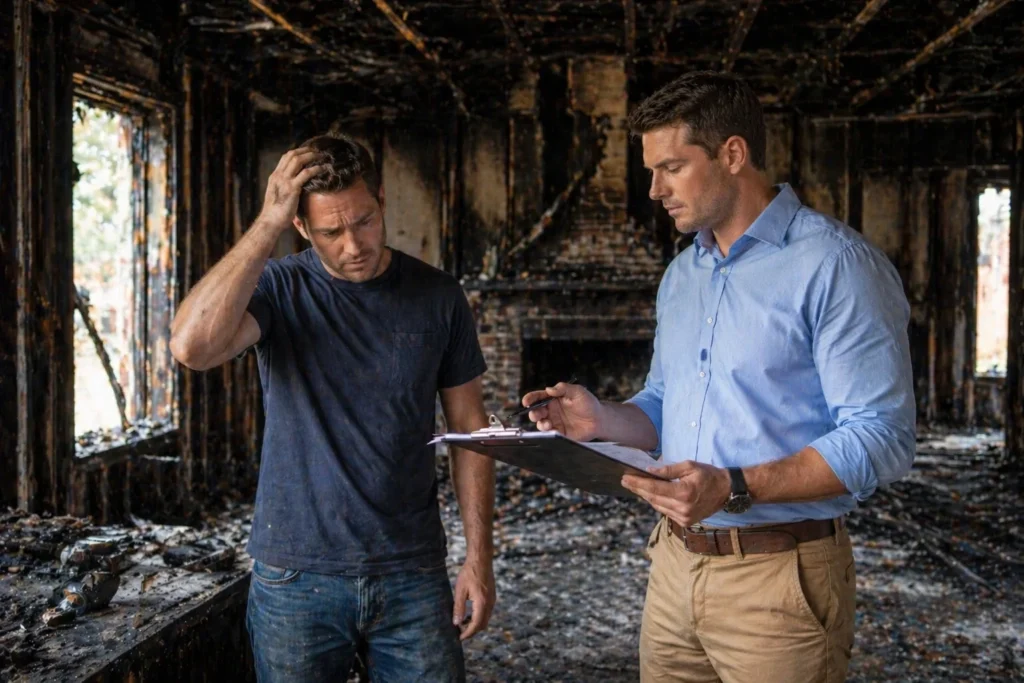
Without expert help, many homeowners run into the same problems.
Common Issues:
- Undervalued claims
- Missed hidden damage (especially smoke and water)
- Confusing policy language
- Delays in processing
- Disputes over scope of loss
Here’s a quick breakdown:
| Challenge | Impact |
| Missed damage | Lower payout |
| Poor documentation | Claim delays |
| Policy confusion | Coverage gaps |
| Low estimates | Out-of-pocket costs |
These aren’t small issues. They can cost thousands.
A Real-World Scenario: Fire Claim in Denton
Let’s make this real. A Denton homeowner experiences a kitchen fire. Flames are contained quickly, but smoke spreads throughout the house.
Without a public adjuster:
- Only visible fire damage is claimed
- Smoke damage in HVAC system is overlooked
- Settlement: $45,000
With a public adjuster:
- Full smoke remediation included
- Air system cleaning documented
- Additional living expenses properly calculated
- Settlement: $78,000
That’s a $33,000 difference. Same fire. Different outcome.

Final Thoughts: Protecting Your Claim and Your Peace of Mind
A fire doesn’t just damage your home. It disrupts your entire life. And while insurance is supposed to help, the process isn’t always straightforward. A skilled fire insurance adjuster can make the difference between a frustrating experience and a fair recovery. They bring clarity. They bring advocacy. And most importantly, they bring results.
If there’s one takeaway, it’s this: don’t go into a fire claim blind. Get the right support early. Ask questions. Stay involved. Because when everything feels uncertain, having the right expert on your side changes everything.
FAQs
A fire insurance adjuster evaluates fire-related damage, reviews your policy, and helps determine how much your insurance company should pay.
You can file a claim without one, but having a fire insurance adjuster can help ensure your damages are fully documented and fairly valued.
An insurance adjuster works for the insurer, while a public adjuster represents you and advocates for a higher, more accurate payout.
Most public adjusters charge a percentage of the final settlement, typically between 10%, with no upfront fees.
It’s best to hire one immediately after a fire or as soon as you feel your claim may be undervalued or delayed.
Yes, many homeowners receive higher settlements because adjusters identify damages and costs that might otherwise be missed.
It can take weeks to months depending on the extent of damage, documentation, and any disputes during the process.
Smoke damage, water damage from firefighting, and structural weakening are commonly missed without detailed inspection.
Yes, you can hire a public adjuster at any stage if you’re unhappy with how your claim is being handled.
If you hire a public adjuster, their fee is typically taken as a percentage of your final insurance settlement.